
• Skip to main content
  • Skip to primary sidebar
Transfusion News
  • About Us
  • Topics
    • Adverse Events (non-infectious)
    • Blood Donation
    • Cell Therapy
    • Coagulation & Plasma Transfusion
    • Platelet Transfusion
    • Policy and Guidelines
    • Quality Control and Regulatory
    • RBC Transfusion
    • Serology/Genotyping
    • Special Transfusion Situations
    • Transfusion Transmitted Infections
  • Continuing Education
  • Archives
  • Podcasts
  • Question of the Day
  • Search
  • Subscribe to Email Alerts
  • Follow us on
  • Search
  • Subscribe to Email Alerts

Deep Learning A.I. System for Platelet Management

January 10, 2024

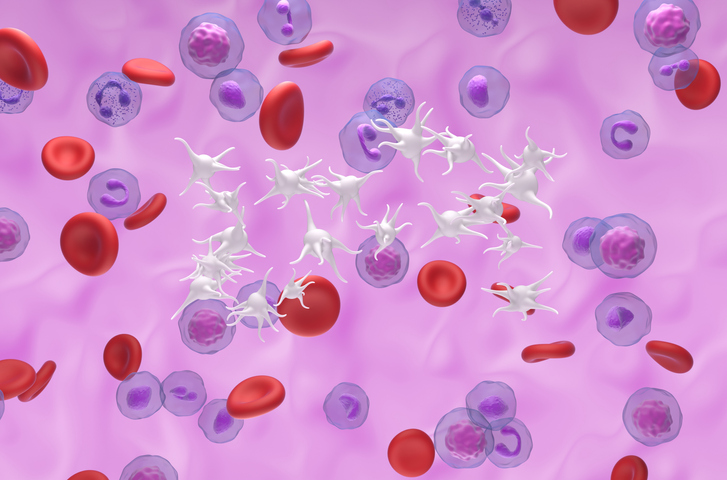
Platelet inventory management is challenging due to their short shelf-life and fluctuating demand.  Researchers in Germany created a risk assessment system for platelet inventory using artificial intelligence (A.I.).  Based on retrospective electronic health records from 2017-2022 at one hospital, over 34,800 patients (median age, 64 years; 42% female) with hospital stays greater than one day and minimum platelet counts <150 X 103 platelets/µL were used to train and test a deep learning risk-assessment model to forecast platelet transfusions for patients within the following 24 hours.  Features in the model included demographics, diagnoses, lab results, past and present medical procedures, previous transfusions, blood counts, medications, and hospital duration.  The model was best at predicting the platelet demands of hematology-oncology patients (area under the precision-recall curve, 0.84; area under the receiver operating curve, 0.98); the model had the lowest performance for cardiothoracic surgery patients, likely because of unexpected bleeding.  While artificial intelligence models have the power to help manage platelet inventory, they have relatively low sensitivity and must be optimized for unique patient populations.

Reference:

M Engelke, CS Schmidt, G Baldini, V Parmar, et al.  Optimizing platelet transfusion through a personalized deep learning risk assessment system for demand management.  Blood 2023; 142 (26); 2315-2326. 

Filed Under

  • News
  • Platelet Transfusion

Recommended

  • HbS Promotes Proinflammatory Cytokine Production in Sickle Cell Disease

  • Perfluoroalkyl and Polyfluoroalkyl Levels after Blood Donations

  • Long-term Survival of Severe Trauma Patients Treated with Tranexamic Acid

Show Comments

Comments on this article are closed.

Get the latest news. Subscribe to our mailing list. Sign Up

Primary Sidebar

Latest News

  • Gene Editing of HBG1 and HBG2 Promotors to Treat β-Thalassemia and Sickle Cell Disease

  • Jehovah’s Witness Governing Body Allows Autologous Transfusions

  • RBC Exchange Transfusion for Patients with Severe Babesiosis

  • Oropouche Virus RNA Detected in Blood Donors in Brazil

    Question of the Day

    Copyright © 2026 John Wiley & Sons, Inc. All Rights Reserved.
    Privacy Policy

    Association for the Advancement of Blood and Biotherapies Wiley