
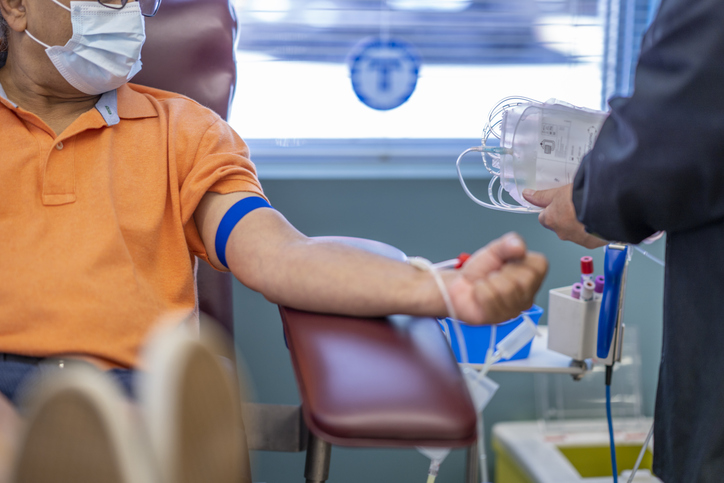
Distraction techniques such as listening to music, squeezing a stress ball, and watching movies have been shown to reduce anxiety, pain and distress during invasive medical procedures. Data on these methods, however, are scarce for blood donation, including apheresis for platelet collections. Since first-time platelet donors may be especially prone to anxiety and distress, researchers at one hospital in Turkey randomized 102 first-time donors aged 18-55 years (94% male; 44% 20-30 years of age) to either listen to 30 minutes of classical music (n=34), 30 minutes of holding a stress ball (n=34), or routine care (n=34) during the 1-hour procedure. Anxiety (based on the Beck Anxiety Scale), distress (based on the Distress Thermometer), pain (based on the Visual Analog Scale), and vital signs were measured pre- and post-platelet donation. Anxiety, distress, pain and vital signs were similar in all groups pre-donation. Post-donation anxiety scores were significantly lower than pre-donation anxiety scores, especially for the stress ball and music arm (Cohen’s d values of 0.8 and 0.9, respectively). In addition, donors in the stress ball and music arms had lower heart and respiratory rates post-donation compared to the control arm (p=0.041). Distraction techniques during blood donation may help improve donor comfort and retention. Further research is needed on the best methods to reduce pain, distress, and anxiety for blood donors.
Reference:


Leave a Reply