
• Skip to main content
  • Skip to primary sidebar
Transfusion News
  • About Us
  • Topics
    • Adverse Events (non-infectious)
    • Blood Donation
    • Cell Therapy
    • Coagulation & Plasma Transfusion
    • Platelet Transfusion
    • Policy and Guidelines
    • Quality Control and Regulatory
    • RBC Transfusion
    • Serology/Genotyping
    • Special Transfusion Situations
    • Transfusion Transmitted Infections
  • Continuing Education
  • Archives
  • Podcasts
  • Question of the Day
  • Search
  • Subscribe to Email Alerts
  • Follow us on
  • Search
  • Subscribe to Email Alerts

Postpartum Hemorrhage and Predelivery Anemia are Risk Factors for Severe Postpartum Anemia after Cesarean Sections

February 1, 2017

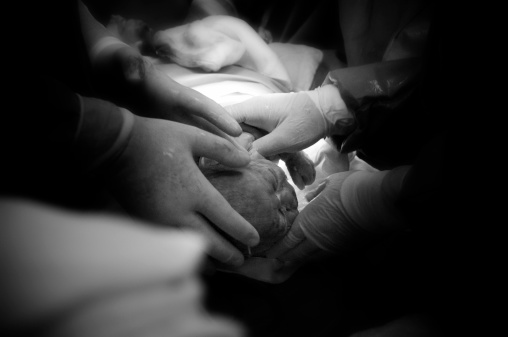
Cesarean sections are one of the most common surgical operations. Postpartum anemia is a prevalent side-effect, and has been linked to postpartum depression, fatigue and other impaired cognitive functions.   In a recent study published by Transfusion, researchers analyzed data from over 70,000 women after cesarean sections performed between 2005 and 2013 to determine risk factors for postpartum anemia.  Overall, 7.3% of women developed severe postpartum anemia (hemoglobin [Hb]<8.0 g/dl). Risk factors for postpartum anemia included postpartum hemorrhage (adjusted odds ratio [aOR]=8.45; [95% CI, 7.8-9.16]) and predelivery anemia (Hb= 10-10.9 g/dL, aOR=5.38; [95%CI, 4.89-5.91]; and Hb<10 g/dL, aOR=30.6; [95% CI, 27.1-34.6]).  Since no guidelines currently exist for postpartum anemia, women who have a cesarean section with postpartum hemorrhage, predelivery anemia, or no predelivery hemoglobin level should be screened approximately one week after delivery.

Reference:

 

  1. Butwick AJ, Walsh EM, Kuzniewicz M, Li SX, Escobar GJ. Patterns and predictors of severe postpartum anemia after Cesarean section. Transfusion 2017;57: 36-44.
  2. Prabhu M, Bateman BT. Postpartum anemia: missed opportunities for prevention and recognition. Transfusion 2017;57: 3-5.

Filed Under

  • News
  • RBC Transfusion
  • Special Transfusion Situations

Recommended

  • Updated Guidance for COVID-19 Convalescent Plasma Use from the FDA and AABB

  • Recurrent Thrombotic Thrombocytopenic Purpura Uncommon in Pregnancy

  • Universal Donor Red Blood Cells Can Be Genetically Engineered Using CRISPR Gene Editing

Show Comments

Comments on this article are closed.

Get the latest news. Subscribe to our mailing list. Sign Up

Primary Sidebar

Latest News

  • Pre-Hospital Resuscitation with Low-Titer Type O Whole Blood for Trauma Patients

  • Double-knotting Blood Storage Bag Tubing Reduces Contamination

  • Costs of Type & Screen and Crossmatch Laboratory Tests for RBCs Higher in U.S. Compared to U.K.

  • Gene Editing of HBG1 and HBG2 Promotors to Treat β-Thalassemia and Sickle Cell Disease

    Question of the Day

    Copyright © 2026 John Wiley & Sons, Inc. All Rights Reserved.
    Privacy Policy

    Association for the Advancement of Blood and Biotherapies Wiley