
• Skip to main content
  • Skip to primary sidebar
Transfusion News
  • About Us
  • Topics
    • Adverse Events (non-infectious)
    • Blood Donation
    • Cell Therapy
    • Coagulation & Plasma Transfusion
    • Platelet Transfusion
    • Policy and Guidelines
    • Quality Control and Regulatory
    • RBC Transfusion
    • Serology/Genotyping
    • Special Transfusion Situations
    • Transfusion Transmitted Infections
  • Continuing Education
  • Archives
  • Podcasts
  • Question of the Day
  • Search
  • Subscribe to Email Alerts
  • Follow us on
  • Search
  • Subscribe to Email Alerts

Platelet Markers Associated with Bleeding in Immune Thrombocytopenia Patients

August 21, 2015

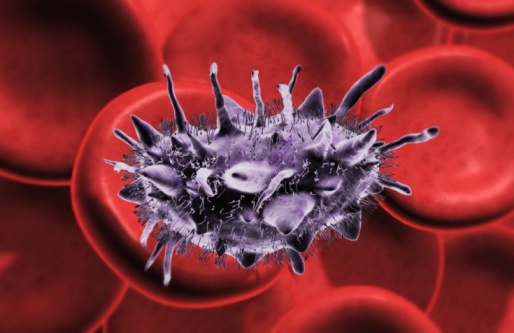
GettyImages-71238758Immune thrombocytopenia (ITP) patients have a decreased number of platelets; however, not all patients have severe bleeding.

A recently published single-site study of 57 pediatric ITP patients (mean age 9.9 years) suggests that some platelet markers are associated with bleeding severity.  After adjusting for platelet count, researchers found that lower bleeding scores were associated with higher levels of thrombin receptor activing peptide (TRAP)-stimulated P-selectin and the activation of GPIIb-IIIa positive platelets.  Higher bleeding scores were associated with increased levels of immature platelet fraction, TRAP-stimulated platelet surface CD42b, unstimulated P-selectin, and platelet forward light scatter.  Platelet function tests and platelet markers associated with severe bleeding may help guide treatment decisions in ITP patients; however, follow-up studies are needed to determine if these markers are consistent overtime.


Reference

  1. Frelinger AL, Grace RF, Gerrits AJ, Berny-Lang MA, Brown T, Carmichael SL, Neufeld EJ, Michelson AD.  Platelet function tests, independent of platelet count, are associated with bleeding severity in ITP.   Blood 2015; 126(7):  873-879.

Filed Under

  • Coagulation & Plasma Transfusion
  • News
  • Special Transfusion Situations

Recommended

  • Minimal Residual Risk for HIV, Hepatitis B, and Hepatitis C from Blood Products

  • Gene Editing of HBG1 and HBG2 Promotors to Treat β-Thalassemia and Sickle Cell Disease

  • Frequent Blood Donation Does Not Increase Clonal Hematopoiesis

Show Comments

Comments on this article are closed.

Get the latest news. Subscribe to our mailing list. Sign Up

Primary Sidebar

Latest News

  • Freeze-Dried Platelets Reduce Blood Brain Barrier Permeability and Intercranial Hemorrhage in Mice with Traumatic Brain Injury

  • α-Gal Sensitization in Group O Blood Recipients Linked to Severe Allergic Transfusion Reactions

  • WHO Reports on Strides and Inequalities in Whole Blood Donations

  • Tranexamic Acid Reduces RBC Transfusion for Adult Noncardiac Surgical Patients

    Question of the Day

    Copyright © 2026 John Wiley & Sons, Inc. All Rights Reserved.
    Privacy Policy

    Association for the Advancement of Blood and Biotherapies Wiley