
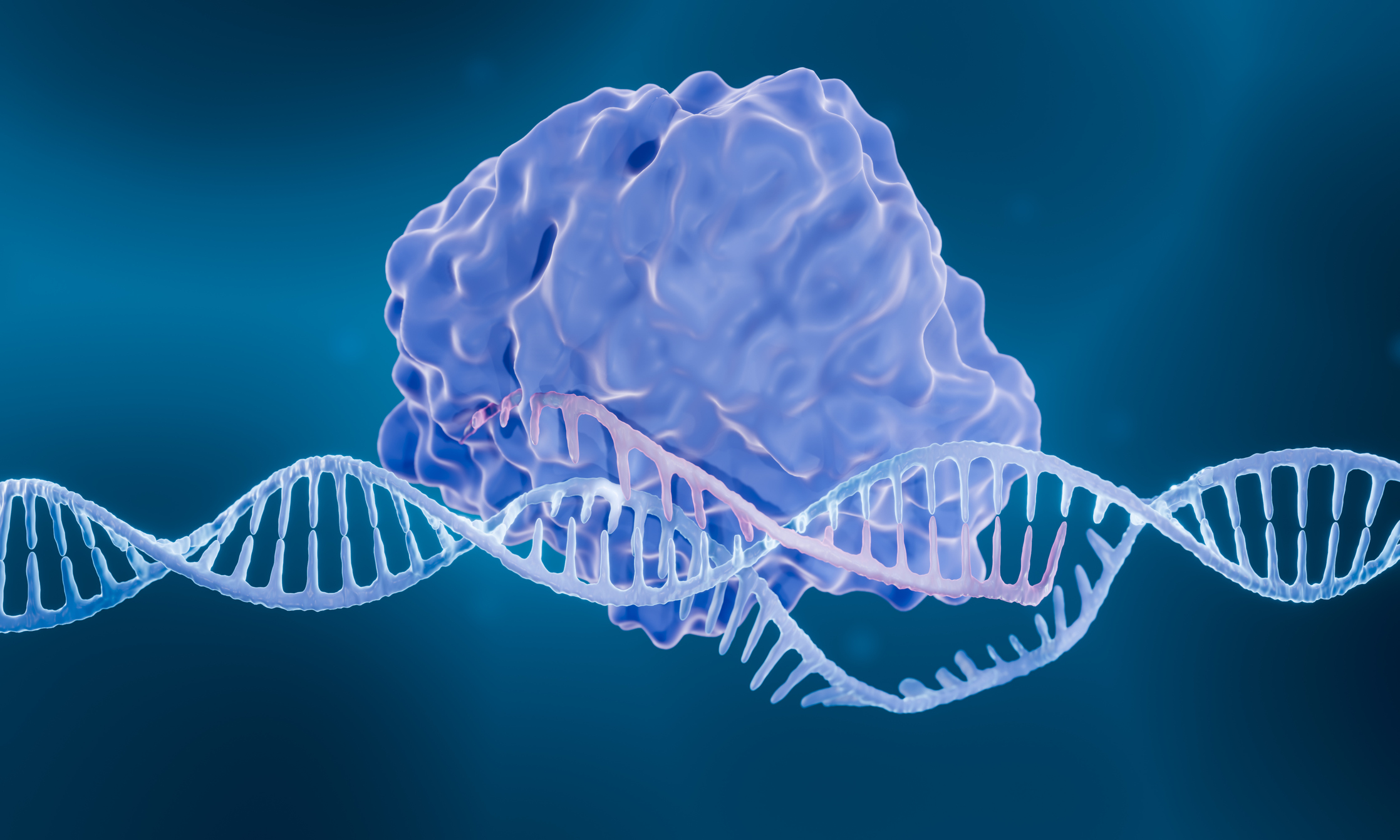
β-thalassemia and sickle cell disease (SCD) are the most common monogenic diseases worldwide. About 20% of these patients may be cured by allogeneic hematopoietic stem-cell transplantations from HLA-matched donors, and recent therapies have been approved to treat both hemoglobinopathies by disrupting the gene encoding BCL11A—the transcription factor that shuts off production of fetal hemoglobin. The naturally occurring hereditary persistence of fetal hemoglobin attenuates the severity of both β-thalassemia and SCD. The New England Journal of Medicine just published data from three studies on targeting the binding sites for BCL11A within the HBG1 and HBG2 promotors, which drive production of fetal hemoglobin and attenuate both β-thalassemia and SCD. Renizgamglogene autogedtemcel (reni-cel) is an autologous hematopoietic stem-cell therapy that uses CRISPR-Cas12a gene editing to modify the HBG1 and HBG2 promotors. This modification increased fetal hemoglobin production and reduced disease severity in phase 1-2 trials involving 9 patients with transfusion-dependent β-thalassemia and 27 patients with severe SCD. Both reni-cell trials were discontinued by Editas Medicine, not due to efficacy or safety concerns, but because the company shifted its focus to in vivo gene editing. Another investigational therapy, ristoglogene autogetemcel (risto-cel), uses a novel base-editing system that also targets the HBG1 and HBG2 promotors. In a phase 1-2 trial of 31 patients with severe SCD, risto-cel showed promising early results: no vaso-occlusive events occurred after engraftment (mean follow-up of 6.6 months, range 0.3 to 20.4 months), and fetal hemoglobin was more than 60% of total hemoglobin 6 months post-infusion. One patient died from idiopathic pneumonia syndrome. Longer follow-up is needed to assess the safety and durability of these gene-editing approaches for β-thalassemia and SCD. Still, these studies support gene editing as a potential curative strategy for monogenic diseases.
References:
- Locatelli F. More Options for Gene Editing in Hemoglobinopathies. N Engl J Med. 2026 Apr 2;394(13):1338-1340. doi: 10.1056/NEJMe2602194. PMID: 41931053.
- Frangoul H, Hanna R, Walters MC, Kao RL, Carroll C, McManus M, Chang KH, Jaskolka MC, Kim K, Yu Q, Badamosi N, Mei B, Afonja O, Thompson A; EdiThal Investigators. CRISPR-Cas12a Gene Editing of HBG1and HBG2 Promoters to Treat β-Thalassemia. N Engl J Med. 2026 Apr 2;394(13):1292-1301. doi: 10.1056/NEJMoa2501277. PMID: 41931048.
- Hanna R, Frangoul H, Pineiro L, McKinney C, Mapara M, Dalal J, Rangarajan HG, Atkins H, Sharma A, Chang KH, Jaskolka MC, Kim K, Yu Q, Mei B, Afonja O, Walters MC; RUBY Investigators. CRISPR-Cas12a Gene Editing of HBG1and HBG2 Promoters to Treat Sickle Cell Disease. N Engl J Med. 2026 Apr 2;394(13):1281-1291. doi: 10.1056/NEJMoa2415550. PMID: 41931047.
- Gupta AO, Sharma A, Frangoul H, Kanter J, Mapara MY, Dalal J, Alavi A, Jaroscak JJ, Ayala E, DiPersio JF, Ziga ED, Eapen M, Rifkin-Zenenberg S, Minella AC, Chen Y, Chesler S, Ambati S, Bowman TS, Habtemariam B, Joseney-Antoine M, Chockalingam PS, Lin L, Goyal S, Simon A, Thompson AA, Heeney MM; BEACON Investigators. Base Editing of HBG1and HBG2 Promoters for Sickle Cell Disease. N Engl J Med. 2026 Apr 1. doi: 10.1056/NEJMoa2504835. Epub ahead of print. PMID: 41931046.


Leave a Reply