
• Skip to main content
  • Skip to primary sidebar
Transfusion News
  • About Us
  • Topics
    • Adverse Events (non-infectious)
    • Blood Donation
    • Cell Therapy
    • Coagulation & Plasma Transfusion
    • Platelet Transfusion
    • Policy and Guidelines
    • Quality Control and Regulatory
    • RBC Transfusion
    • Serology/Genotyping
    • Special Transfusion Situations
    • Transfusion Transmitted Infections
  • Continuing Education
  • Archives
  • Podcasts
  • Question of the Day
  • Search
  • Subscribe to Email Alerts
  • Follow us on
  • Search
  • Subscribe to Email Alerts

Hematopoietic Stem Cell Transplants for Patients with Sickle Cell Disease

December 29, 2015

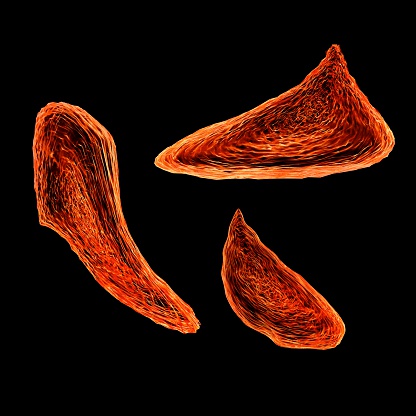
Sickle cell anaemia, illustration


Data presented at the 57th American Society of Hematology Annual Meeting and Exposition in December in Orlando, Florida suggests that hematopoietic stem cell transplants (HSCT) from HLA identical siblings to cure sickle cell disease are usually successful. HSCT were performed in 23 countries between 1991 and 2013. HSCT is the only cure for sickle cell disease, but HSCT is rarely performed due to complications and mortality. However, three-year survival was 99% for transplants with cord blood stem cells, 94% for bone marrow stem cells, and 80% for peripheral blood grafts. Overall survival decreased with age (HR 1.1, p<0.001). Data suggest that HSCT from HLA identical siblings are usually successful, and patients with sickle cell disease should be referred for HSCT early.


Reference

  1. Cappelli B, Bernaudin F, Ruggeri A, et al. Hematopoietic Stem Cell Transplantation from HLA Identical Sibling for Sickle Cell Disease an International Survey on Behalf of Eurocord-Monacord, EBMT Paediatric Disease Working Party and CIBMTR. American Society of Hematology 57th Annual Meeting & Exposition. Orlando, FL. December 5-8, 2015.

Filed Under

  • News
  • Special Transfusion Situations

Recommended

  • RHD Genotyping May Enable D-positive RBC Units to be Transfused to Patients with Anti-D

  • Recurrence of ABO Blood Groups Stems From Trans-Species Polymorphism

  • Twelve Month Donor Deferral for MSM May Not Increase Risk of Transfusion-Transmitted HIV

Show Comments

Comments on this article are closed.

Get the latest news. Subscribe to our mailing list. Sign Up

Primary Sidebar

Latest News

  • Freeze-Dried Platelets Reduce Blood Brain Barrier Permeability and Intercranial Hemorrhage in Mice with Traumatic Brain Injury

  • α-Gal Sensitization in Group O Blood Recipients Linked to Severe Allergic Transfusion Reactions

  • WHO Reports on Strides and Inequalities in Whole Blood Donations

  • Tranexamic Acid Reduces RBC Transfusion for Adult Noncardiac Surgical Patients

    Question of the Day

    Copyright © 2026 John Wiley & Sons, Inc. All Rights Reserved.
    Privacy Policy

    Association for the Advancement of Blood and Biotherapies Wiley