
• Skip to main content
  • Skip to primary sidebar
Transfusion News
  • About Us
  • Topics
    • Adverse Events (non-infectious)
    • Blood Donation
    • Cell Therapy
    • Coagulation & Plasma Transfusion
    • Platelet Transfusion
    • Policy and Guidelines
    • Quality Control and Regulatory
    • RBC Transfusion
    • Serology/Genotyping
    • Special Transfusion Situations
    • Transfusion Transmitted Infections
  • Continuing Education
  • Archives
  • Podcasts
  • Question of the Day
  • Search
  • Subscribe to Email Alerts
  • Follow us on
  • Search
  • Subscribe to Email Alerts

Combinations of Monoclonal Antibodies Efficiently Suppress Red Blood Cell Alloimmunization in Mice

August 31, 2016

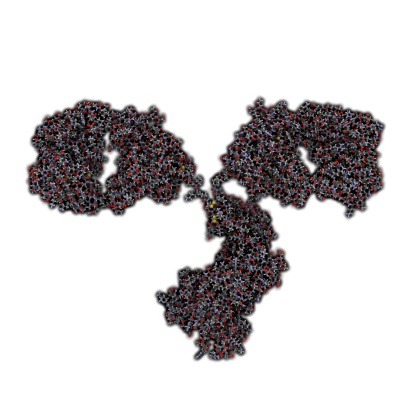
Antibody molecule

Polyclonal anti-RhD antibodies are used to prevent hemolytic disease of the fetus and newborn. These antibodies are currently collected from RhD-negative men who have been intentionally immunized with RhD+ red blood cells (RBCs).  Monoclonal and recombinant antibodies have been produced in order to generate a renewable source of anti-RhD antibodies, but may not be as effective.  To address this issue and optimize suppression of alloantibody formation, single-monoclonal RhD-antibodies and combinations of monoclonal antibodies were injected into immunologically-naïve mice, and the anti-allogeneic RBC antibody responses were measured. While monoclonal anti-RhD antibodies suppressed the alloimmune response to a small degree, combining two or more monoclonal antibodies that target unique epitopes was as efficient at suppressing RBC alloimmunization as polyclonal preparations in mice.  Blends of monoclonal antibodies may be helpful in preventing hemolytic disease of the fetus and newborn.


  1. Bernardo L, Amash A, Marjoram D, Lazarus AH. Antibody-mediated immune suppression is improved when blends of anti-RBC monoclonal antibodies are used in mice. Blood 2016;128: 1076-80.
  2. Stowell SR. Working together to block alloimmunization. Blood 2016;128: 1029-30.

 

Filed Under

  • News
  • Serology/Genotyping
  • Special Transfusion Situations

Recommended

  • SARS-CoV-2 Seropositivity of U.S. Blood Donors Prior to Availability of Vaccines

  • Double-Unit Cord-Blood Transplants Are Not Advantageous Compared to Single-Unit Transplants

  • Red Blood Cell Transfusion Increases Platelet Aggregation in Anemic Patients

Show Comments

Comments on this article are closed.

Get the latest news. Subscribe to our mailing list. Sign Up

Primary Sidebar

Latest News

  • Double-knotting Blood Storage Bag Tubing Reduces Contamination

  • Costs of Type & Screen and Crossmatch Laboratory Tests for RBCs Higher in U.S. Compared to U.K.

  • Gene Editing of HBG1 and HBG2 Promotors to Treat β-Thalassemia and Sickle Cell Disease

  • Jehovah’s Witness Governing Body Allows Autologous Transfusions

    Question of the Day

    Copyright © 2026 John Wiley & Sons, Inc. All Rights Reserved.
    Privacy Policy

    Association for the Advancement of Blood and Biotherapies Wiley