
• Skip to main content
  • Skip to primary sidebar
Transfusion News
  • About Us
  • Topics
    • Adverse Events (non-infectious)
    • Blood Donation
    • Cell Therapy
    • Coagulation & Plasma Transfusion
    • Platelet Transfusion
    • Policy and Guidelines
    • Quality Control and Regulatory
    • RBC Transfusion
    • Serology/Genotyping
    • Special Transfusion Situations
    • Transfusion Transmitted Infections
  • Continuing Education
  • Archives
  • Podcasts
  • Question of the Day
  • Search
  • Subscribe to Email Alerts
  • Follow us on
  • Search
  • Subscribe to Email Alerts

Emicizumab Therapy for Hemophilia A

September 5, 2018

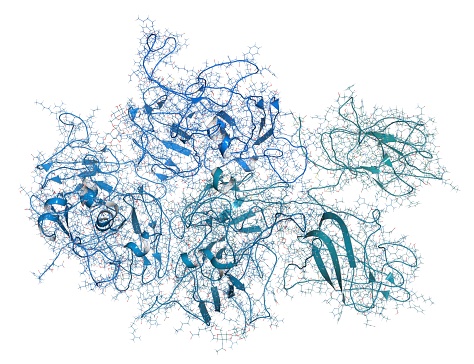
Treatment for hemophilia A usually involves intravenous injections of factor VIII multiple times a week. In 2012, emicizumab (a bispecific antibody which mimics factor VIII interactions with factors IXa and X) was recognized as a potential treatment. The results of a phase 3, multicenter, randomized controlled trial involving patients with hemophilia A were recently published in The New England Journal of Medicine.  Patients without inhibitors and who had been receiving episodic factor VIII treatments were randomized in a 2:2:1 ratio to receive either weekly emicizumab (1.5 mg/kg of body weight) (group A, N=36), emicizumab every 2 weeks (3.0 mg/kg of body weight) (group B, N=35), or no prophylaxis (group C, N=18).  Patients who had been receiving factor VIII prophylaxis received emicizumab weekly (1.5 mg/kg) (group D, N=48).   Compared to patients in group C with no prophylaxis, emicizumab given weekly or every two weeks (groups A and B) lowered bleeding rates at least 96% (P<0.001 for both comparisons).  In addition, patients who received emicizumab prophylaxis instead of factor VIII (group D) had an annualized bleeding rate that was 68% lower (P<0.001).  No major adverse events were reported during the trial. Emicizumab therapy may help improve the care of patients with hemophilia A.

References:

  1. Mahlangu J, Oldenburg J, Paz-Priel I, Negrier C, et al. Emicizumab prophylaxis in patients who have hemophilia A without inhibitors. The New England Journal of Medicine 2018; 379(9);811-822.
  2. Ragni MV. Mimicking factor VIII to manage factor VIII-deficient state. The New England Journal of Medicine 2018; 379(9);880-882.  

Filed Under

  • Coagulation & Plasma Transfusion
  • News
  • Special Transfusion Situations

Recommended

  • Pre-Hospital Transfusion Reduces Risk of Death and Improves Coagulation Status in Trauma Patients

  • Donor Age, Not Donor Sex, Is the Primary Factor Influencing RBC Deformability

  • Gut Microbe Exoglycosidases Target ABO Blood Group Antigens to Generate ABO-Universal Blood

Show Comments

Reader Interactions

Comments

  1. Clara Logan says

    September 18, 2018 at 2:43 am

    It is such a depressing disorder and hemophilia treatment is very complicated and expensive

Comments on this article are closed.

Get the latest news. Subscribe to our mailing list. Sign Up

Primary Sidebar

Latest News

  • Gene Editing of HBG1 and HBG2 Promotors to Treat β-Thalassemia and Sickle Cell Disease

  • Jehovah’s Witness Governing Body Allows Autologous Transfusions

  • RBC Exchange Transfusion for Patients with Severe Babesiosis

  • Oropouche Virus RNA Detected in Blood Donors in Brazil

    Question of the Day

    Copyright © 2026 John Wiley & Sons, Inc. All Rights Reserved.
    Privacy Policy

    Association for the Advancement of Blood and Biotherapies Wiley