
• Skip to main content
  • Skip to primary sidebar
Transfusion News
  • About Us
  • Topics
    • Adverse Events (non-infectious)
    • Blood Donation
    • Cell Therapy
    • Coagulation & Plasma Transfusion
    • Platelet Transfusion
    • Policy and Guidelines
    • Quality Control and Regulatory
    • RBC Transfusion
    • Serology/Genotyping
    • Special Transfusion Situations
    • Transfusion Transmitted Infections
  • Continuing Education
  • Archives
  • Podcasts
  • Question of the Day
  • Search
  • Subscribe to Email Alerts
  • Follow us on
  • Search
  • Subscribe to Email Alerts

Platelet-RBC Complexes Associated with RBC Clearance

February 21, 2024

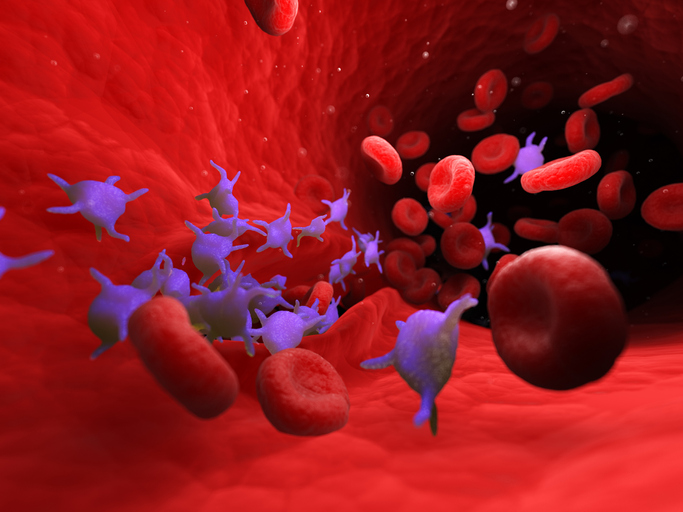
Platelet-RBC (P-RBC) complexes are associated with several diseases such as sickle cell disease, malaria, and immune thrombocytopenia.  Since diseased RBCs exhibit similar morphology to aged and senescent RBCs, and P-RBC complexes have been observed in up to 0.3% of human RBCs in healthy individuals, researchers hypothesized that the P-RBCs may form in order to be targeted for clearance from circulation when undergoing senescence.  Using a pulse-chase mouse model, researchers labeled RBCs and tracked them over 60 days (the lifespan of murine RBCs) and detected ten-fold more P-RBC complexes in 50 to 60 day-old RBCs compared to those less than 50 days.  P-RBC complexes were removed seven-times faster than RBCs and three-times faster than platelets via erythrophagocytosis in the spleen, and platelets were required to maintain senescent RBC clearance.  Corollary studies in human patients (n=16) showed higher levels of P-RBC complexes in the bloodstream 60 days post-splenectomy compared to healthy controls.  Furthermore, nine patients with immune thrombocytopenia had decreased P-RBC complexes and increased aged RBCs compared to healthy controls.  Future research is needed to investigate how this novel pathway is involved in disease pathogenesis.

References:

  1. Ningtyas DC, Leitner F, Sohail H, Thong YL, et al. Platelets mediate the clearance of senescent red blood cells by forming prophagocytic platelet-cell complexes. Blood2024; 143 (6): 535–547
  2. Vautrinot J and AW Platelets tell old red cells to clear off. Blood2024; 143 (6): 480–481

Filed Under

  • News
  • Special Transfusion Situations

Recommended

  • WHO Defends Voluntary Blood Donation Policy

  • FDA Approves Blood Tracking Device

  • Stored RBCs May Have Slower Oxygen Unloading for Tissue

Show Comments

Comments on this article are closed.

Get the latest news. Subscribe to our mailing list. Sign Up

Primary Sidebar

Latest News

  • Oropouche Virus RNA Detected in Blood Donors in Brazil

  • Intravenous Iron More Effective than Oral to Treat Anemia in Postpartum Women

  • Prehospital Whole Blood is Not Superior to Blood Components for Trauma Patients

  • Running Ultra-Long Distances Induces Inflammatory and Oxidative Stress Changes in RBCs

    Question of the Day

    Copyright © 2026 John Wiley & Sons, Inc. All Rights Reserved.
    Privacy Policy

    Association for the Advancement of Blood and Biotherapies Wiley