
• Skip to main content
  • Skip to primary sidebar
Transfusion News
  • About Us
  • Topics
    • Adverse Events (non-infectious)
    • Blood Donation
    • Cell Therapy
    • Coagulation & Plasma Transfusion
    • Platelet Transfusion
    • Policy and Guidelines
    • Quality Control and Regulatory
    • RBC Transfusion
    • Serology/Genotyping
    • Special Transfusion Situations
    • Transfusion Transmitted Infections
  • Continuing Education
  • Archives
  • Podcasts
  • Question of the Day
  • Search
  • Subscribe to Email Alerts
  • Follow us on
  • Search
  • Subscribe to Email Alerts

Iron Supplementation for Blood Donors Based on Ferritin Levels

November 5, 2025

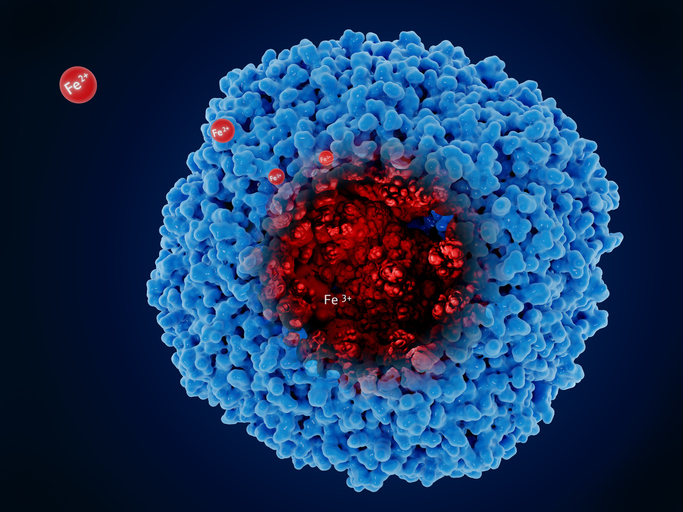
With each whole blood donation, donors lose approximately 250 mg of iron and have a higher risk of developing iron deficiency (ferritin <15 µg/L) and low hemoglobin levels. Blood collection centers primarily focus on hemoglobin levels to prevent iron deficiency and anemia in donors. Due to recent research showing that ferritin-guided donation intervals reduce iron deficiency, many centers are now monitoring donors’ iron stores and recommending iron supplementation.  Questions remain, however, about gastrointestinal discomfort, donor return rate, and optimal iron formulations and dosages. To address some of these questions, researchers in the Netherlands randomized repeat whole blood donors with low ferritin (15 to 30 µg/L; n=830; 56% female) to receive either 0 mg (placebo), 30 mg or 60 mg ferrous bisglycinate (a highly absorbable iron formulation with fewer digestive side effects than traditional iron supplements) either daily or on alternate days. After 56 days of iron supplementation, only 1% of donors taking 60 mg daily were iron deficient compared with 4% of those taking 60 mg on alternate days, 10% and 7% of those taking 30 mg daily and on alternate days, respectively and 51% and 49% of those taking placebo daily and on alternate days, respectively. Daily supplementation with 60 mg of iron was also the most effective regimen for preventing low ferritin and low hemoglobin levels. Furthermore, gastrointestinal discomfort was low in all study arms and not significantly different. While iron supplementation is safe and effective for repeat donors and protects against iron deficiency, further research is needed for first-time donors and the intention of all donors to return while taking iron supplements.

Reference:

Karregat JHM, Meulenbeld A, Quee FA, Novotny VMJ, et al. Ferritin-guided iron supplementation as an alternative or complement to prolonged blood donation intervals (FORTE): a double-blind, randomised, controlled trial. Lancet Haematol. 2025 Sep;12(9):e694-e704. doi: 10.1016/S2352-3026(25)00167-X. Epub 2025 Aug 14. PMID: 40819648.

Filed Under

  • Blood Donation
  • News

Recommended

  • Administration of Fibrinogen Concentrate during Cardiac Surgery Does Not Significantly Reduce Blood Loss

  • RBCs Regulate Hemostasis Through Platelet-Dependent and -Independent Mechanisms

  • New Erythropoietin Gene Variants Linked to Hereditary Erythrocytosis

Show Comments

Comments on this article are closed.

Get the latest news. Subscribe to our mailing list. Sign Up

Primary Sidebar

Latest News

  • Blood Donation and Improved Cardiometabolic Health

  • Mitochondrial DNA Acts as a “First Hit” for Antibody-Mediated TRALI

  • Liberal or Restrictive Transfusion Thresholds for Surgery Patients with High Cardiac Risk

  • Iron Supplementation for Blood Donors Based on Ferritin Levels

    Question of the Day

    Copyright © 2025 John Wiley & Sons, Inc. All Rights Reserved.
    Privacy Policy

    Association for the Advancement of Blood and Biotherapies Wiley