
• Skip to main content
  • Skip to primary sidebar
Transfusion News
  • About Us
  • Topics
    • Adverse Events (non-infectious)
    • Blood Donation
    • Cell Therapy
    • Coagulation & Plasma Transfusion
    • Platelet Transfusion
    • Policy and Guidelines
    • Quality Control and Regulatory
    • RBC Transfusion
    • Serology/Genotyping
    • Special Transfusion Situations
    • Transfusion Transmitted Infections
  • Continuing Education
  • Archives
  • Podcasts
  • Question of the Day
  • Search
  • Subscribe to Email Alerts
  • Follow us on
  • Search
  • Subscribe to Email Alerts

Interventions to Prevent Vasovagal Reactions among Blood Donors

February 17, 2026

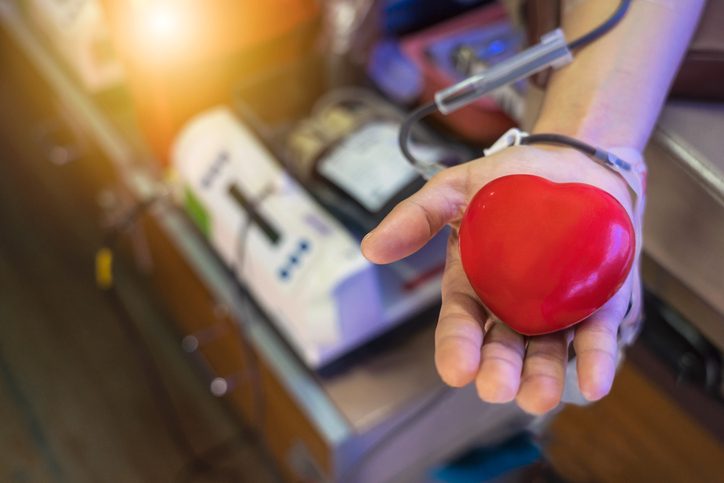
Donating blood is considered safe. Vasovagal reactions, however, occur fairly often and may lead to lower rates of donor retention and morbidity, especially if associated with a fall. Although there are limited data on how best to prevent vasovagal reactions, blood collection centers have implemented several strategies including donor hydration, applied muscle tension, caffeine loading, eating before donations, and post-donation resting. To determine the best strategies to reduce vasovagal reactions, researchers in England performed a cluster-randomized stepped-wedge, cross-over trial over three years at 73 blood collection sites to compare four interventions: 500 mL isotonic drink compared to 500 mL water, 3-minute rest on donation chair compared to the standard 2-minute rest, modified muscle tension exercises compared to standard muscle tension exercises, and psychosocial interventions compared to none. During the study period, nearly 1.4 million individuals gave 4.1 million whole blood donations (median donor age, 41 years; 57% female). Vasovagal reactions occurred during 60,517 donations (1.46%), and vasovagal reactions with loss of consciousness occurred during 4,388 donations (0.11%). Compared with the standard interventions, none of the four tested interventions significantly reduced vasovagal reactions with or without loss of consciousness (odds ratios varied between 0.97 and 1.12) even across donor subgroups, including age, sex, and donor experience. Further research is needed to try to reduce vasovagal reactions during blood collection.

Reference:

Kaptoge S, McMahon A, Wu Y, Gilchrist PT, et al; STRIDES Trial Group. Preventive interventions for vasovagal reactions in whole blood donors: a cluster-randomised, stepped-wedge, crossover trial of 73 sites involving 1·4 million donors in England. Lancet Haematol. 2026 Feb;13(2):e64-e73. doi: 10.1016/S2352-3026(25)00319-9. Epub 2026 Jan 16. PMID: 41554266. 

Filed Under

  • Blood Donation
  • News

Recommended

  • Randomized Noninferiority Trial of Restrictive Transfusion Thresholds for Patients with Acute Myocardial Infarction

  • Blood Collection and Processing Methods Affect Inflammatory Response in Vitro

  • Restrictive Blood Transfusion Policies are Associated with a Lower Risk of Infection

Show Comments

Comments on this article are closed.

Get the latest news. Subscribe to our mailing list. Sign Up

Primary Sidebar

Latest News

  • Gene Editing of HBG1 and HBG2 Promotors to Treat β-Thalassemia and Sickle Cell Disease

  • Jehovah’s Witness Governing Body Allows Autologous Transfusions

  • RBC Exchange Transfusion for Patients with Severe Babesiosis

  • Oropouche Virus RNA Detected in Blood Donors in Brazil

    Question of the Day

    Copyright © 2026 John Wiley & Sons, Inc. All Rights Reserved.
    Privacy Policy

    Association for the Advancement of Blood and Biotherapies Wiley