
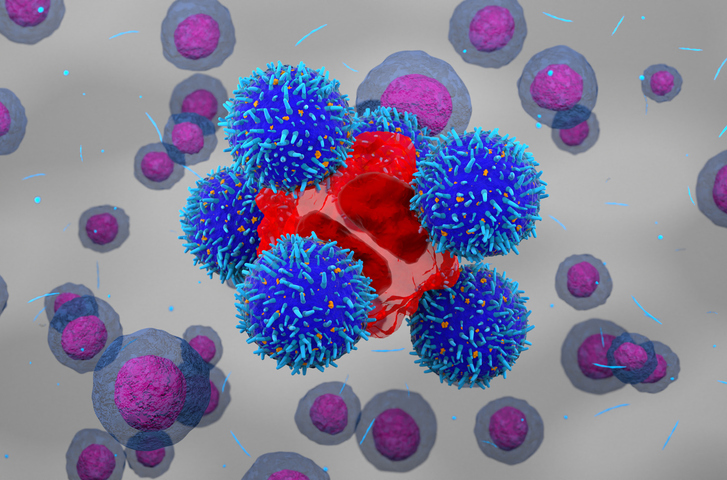
A significant proportion of patients with autoimmune hemolytic anemia (AIHA) become refractory to available treatments. Researchers in China are now exploring whether CD19 chimeric antigen receptor (CAR) T-cell therapy may be used to safely treat patients with multirefractory AIHA who have a lack of response to at least three lines of treatment. Briefly, 11 patients with multirefractory AIHA (median age, 47; median duration of disease, 71 months) enrolled in a phase 1 study or compassionate-use program received either 0.5 X 10⁶ or 1.0 X 10⁶ per kg body weight autologous CD19 CAR T-cells; patients were followed for a median of 12 months (range, 7 to 21), and the safety profile of treatment was as expected. The median time to partial response was 16.5 days (with hemoglobin >100g/L and transfusion free for at least 7 days), and all patients had a complete response (resolution of symptoms without treatment with normal Hb levels and hemolysis markers) by three months. Patients remained in remission without the need for further treatment for a median of 11.5 months (range, 7 to 21). Based on multi-omics analysis of B-cells, naïve B-cells were predominate in patients with a complete response, and HLA-DRB5+ B cells were observed in patients when they relapsed. Further research is needed to explore the therapeutic potential and safety of CD19 CAR T-cell therapy for autoimmune conditions like AIHA.
Reference:

