
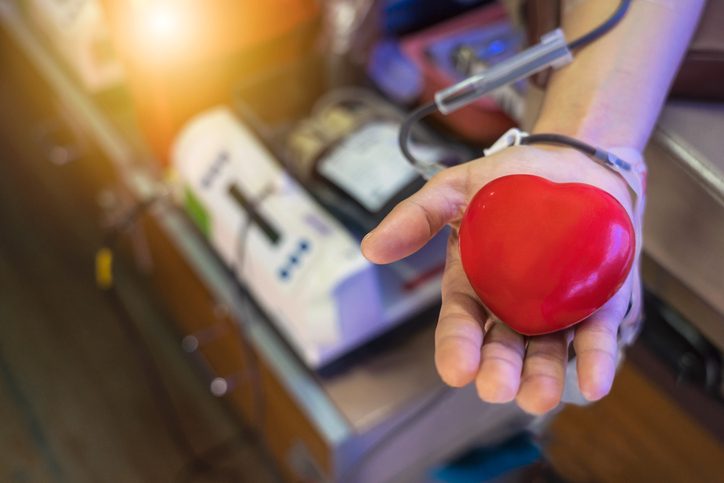
Donating blood is considered safe. Vasovagal reactions, however, occur fairly often and may lead to lower rates of donor retention and morbidity, especially if associated with a fall. Although there are limited data on how best to prevent vasovagal reactions, blood collection centers have implemented several strategies including donor hydration, applied muscle tension, caffeine loading, eating before donations, and post-donation resting. To determine the best strategies to reduce vasovagal reactions, researchers in England performed a cluster-randomized stepped-wedge, cross-over trial over three years at 73 blood collection sites to compare four interventions: 500 mL isotonic drink compared to 500 mL water, 3-minute rest on donation chair compared to the standard 2-minute rest, modified muscle tension exercises compared to standard muscle tension exercises, and psychosocial interventions compared to none. During the study period, nearly 1.4 million individuals gave 4.1 million whole blood donations (median donor age, 41 years; 57% female). Vasovagal reactions occurred during 60,517 donations (1.46%), and vasovagal reactions with loss of consciousness occurred during 4,388 donations (0.11%). Compared with the standard interventions, none of the four tested interventions significantly reduced vasovagal reactions with or without loss of consciousness (odds ratios varied between 0.97 and 1.12) even across donor subgroups, including age, sex, and donor experience. Further research is needed to try to reduce vasovagal reactions during blood collection.
Reference:

