
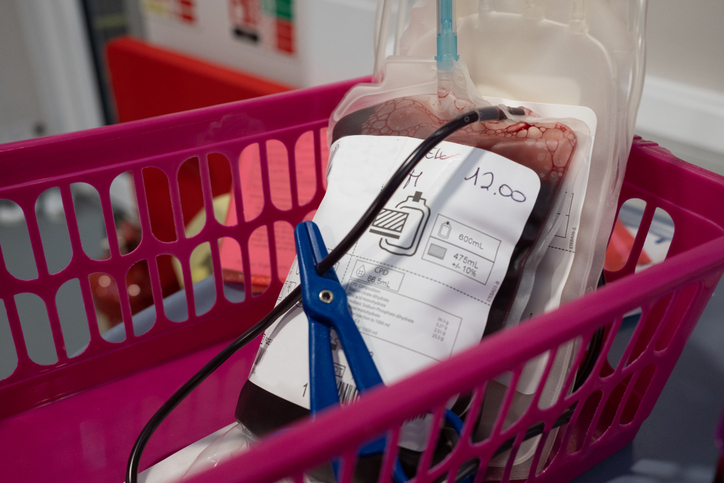
Most blood establishments monitor hemoglobin (Hb) levels to prevent anemia, but Hb monitoring does not protect against iron deficiency (ID). Many blood collection organizations therefore now monitor donors’ iron stores, including in the Netherlands (since 2017) and France (since 2022). To measure the success of these new policies, researchers retrospectively calculated rates of ID (ferritin <15 ng/mL) and donor deferrals before and after their policy changes. In the Netherlands, ferritin is measured in all new donors and every 5th whole blood donation, and donors are deferred for 12 months if ferritin levels are below 15 ng/mL and 6 months if levels are between 15 and 30 ng/mL. In France, ferritin levels are only measured in donors with risk of developing ID (based on sex, donation frequency, Hb levels, and mean corpuscular Hb values), and donors are deferred for 6 months if ferritin is less than 15 ng/mL. Before the policy changes, 24% and 21% of Dutch and French women had ID along with 25% and 7% of Dutch and French male donors, respectively. After the policy changes, 4.8% and 4.2% of Dutch and French females were deferred for ID along with 1.6% and 1.0% of Dutch and French males, respectively. Post deferral donor return rates were similar between the countries. Though slightly different, both ferritin donor deferral strategies were effective at decreasing iron deficiency in donors. Further research is needed into the best strategies to safeguard donors’ iron stores, including iron supplementation.
Reference:

