
• Skip to main content
  • Skip to primary sidebar
Transfusion News
  • About Us
  • Topics
    • Adverse Events (non-infectious)
    • Blood Donation
    • Cell Therapy
    • Coagulation & Plasma Transfusion
    • Platelet Transfusion
    • Policy and Guidelines
    • Quality Control and Regulatory
    • RBC Transfusion
    • Serology/Genotyping
    • Special Transfusion Situations
    • Transfusion Transmitted Infections
  • Continuing Education
  • Archives
  • Podcasts
  • Question of the Day
  • Search
  • Subscribe to Email Alerts
  • Follow us on
  • Search
  • Subscribe to Email Alerts

Liquid Plasma Acceptable for Severe Trauma Patients with Major Bleeding

March 16, 2017

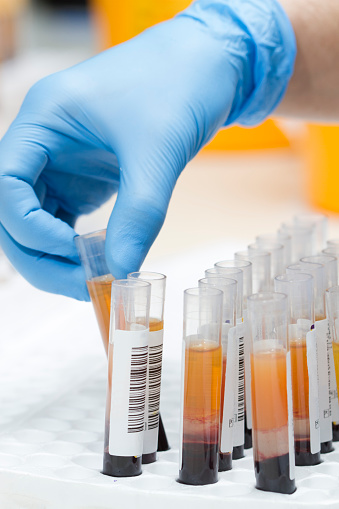
Recent studies have highlighted the importance of expeditious transfusion of plasma, platelets and red blood cells in a 1:1:1 ratio for severe trauma patients who are at risk of exsanguination. Since thawing plasma can be time-consuming, a recent study published in TRANSFUSION examined the hemostatic properties of thawed and liquid plasma over several days of storage.  Briefly, during initial processing after donation 17 pooled ABO-matched plasma units were split into a liquid plasma unit and a frozen unit (subsequently thawed and stored for up to five days), and multiple hemostasis parameters, coagulation factors, and platelet activation assays were performed.  A further 119 liquid plasma samples were analyzed for platelet activation and cellular content.  Liquid plasma at day seven was comparable to thawed plasma at day five by every assay.  However, after 11 days of storage, coagulation factors started to decline in liquid plasma, and cold-induced contact activation was observed after 28 days of storage.  Although further research is needed to determine the optimal storage time, liquid plasma is logistically easier to use for many severe trauma patients.

References:

Backholer L, Green L, Huish S, Platton S, Wiltshire M, Doughty H, Curnow E, Cardigan R. A paired comparison of thawed and liquid plasma. Transfusion 2016

Cardenas J, Holcomb J. Time to plasma transfusion:  A patient centered approach and modifiable risk factor.  Transfusion 2016.


Filed Under

  • CME
  • Coagulation & Plasma Transfusion
  • News

Recommended

  • Bacterial sepsis among transfusion recipients despite secondary mitigation strategies

  • Pathogenesis of Antibody-Mediated TRALI by Complement

  • Liberal or Restrictive Transfusion Thresholds for Surgery Patients with High Cardiac Risk

Show Comments

Comments on this article are closed.

Get the latest news. Subscribe to our mailing list. Sign Up

Primary Sidebar

Latest News

  • Influence of Transfusion Recipient and Donor Traits in Patients with Sickle Cell Disease

  • Pre-Hospital Resuscitation with Low-Titer Type O Whole Blood for Trauma Patients

  • Double-knotting Blood Storage Bag Tubing Reduces Contamination

  • Costs of Type & Screen and Crossmatch Laboratory Tests for RBCs Higher in U.S. Compared to U.K.

    Question of the Day

    Copyright © 2026 John Wiley & Sons, Inc. All Rights Reserved.
    Privacy Policy

    Association for the Advancement of Blood and Biotherapies Wiley