
• Skip to main content
  • Skip to primary sidebar
Transfusion News
  • About Us
  • Topics
    • Adverse Events (non-infectious)
    • Blood Donation
    • Cell Therapy
    • Coagulation & Plasma Transfusion
    • Platelet Transfusion
    • Policy and Guidelines
    • Quality Control and Regulatory
    • RBC Transfusion
    • Serology/Genotyping
    • Special Transfusion Situations
    • Transfusion Transmitted Infections
  • Continuing Education
  • Archives
  • Podcasts
  • Question of the Day
  • Search
  • Subscribe to Email Alerts
  • Follow us on
  • Search
  • Subscribe to Email Alerts

Pre-Hospital Resuscitation with Low-Titer Type O Whole Blood for Trauma Patients

May 26, 2026

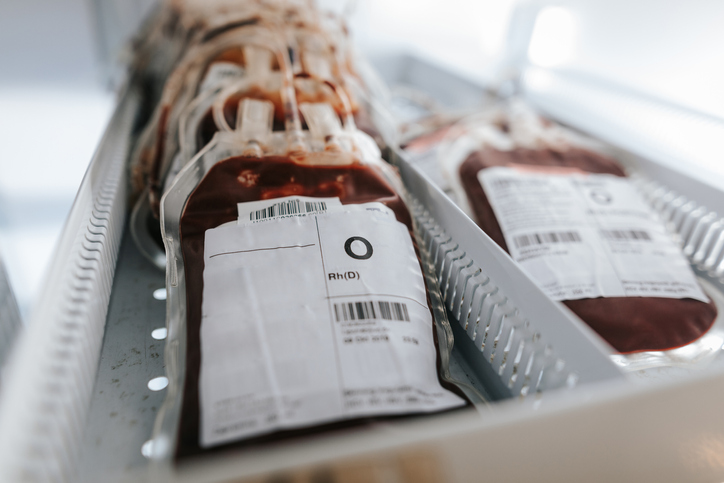
Low-titer whole blood is increasingly used during prehospital transfusions for both military and civilian trauma patients because the logistics of storage and transfusion are simpler compared with blood components (red cells and plasma). Prehospital transfusion reduces mortality in patients who have experienced major trauma and hemorrhage, but it is unclear whether whole blood is safer or more effective than blood components at reducing mortality or hemorrhage. The Type O Whole Blood and Assessment of Age during Prehospital Resuscitation (TOWAR) trial randomized 44 air medical bases at 11 trauma centers in the U.S. and Canada in a 2:1 ratio to transfuse up to 2 units during prehospital resuscitation of either low-titer (low anti-A and anti-B antibody titers) whole blood or blood components (red cells and/or plasma) for fixed 1-month blocks. Of the 1020 trauma patients (74% male; median Injury Severity Score, 25) enrolled in the study, 695 received whole blood stored up to 21 days and 298 received blood components. No significant difference in mortality was observed between the arms—26% (180/695) patients in the whole blood arm died within 30 days compared to 21% (61/298) in the component arm (adjusted odds ratio, 1.24; 95% C.I., 0.87 to 1.76; p=0.24). In addition, 30-day mortality was similar between patients who received whole blood stored for 15-21 days compared to those who received whole blood stored for 1-14 days (27% vs. 26%, respectively). While prehospital whole blood transfusion is a safe alternative, it is not superior to component therapy for trauma patients.

Reference:

Sperry JL, Guyette FX, Cotton BA, Luther JF, et al; TOWAR Study Group. Prehospital Resuscitation with Type O Whole Blood for Trauma and Hemorrhage. N Engl J Med. 2026 May 18. doi: 10.1056/NEJMoa2602167. Epub ahead of print. PMID: 42150044

Filed Under

  • News
  • RBC Transfusion
  • Special Transfusion Situations

Recommended

  • Tranexamic Acid in Noncardiac Surgeries

  • Acute Normovolemic Hemodilution Does Not Reduce RBC Transfusions

  • Gene Therapy for Hemophilia A Patients Successful

Show Comments

Reader Interactions

Leave a Reply Cancel reply

Your email address will not be published. Required fields are marked *

Get the latest news. Subscribe to our mailing list. Sign Up

Primary Sidebar

Latest News

  • Pre-Hospital Resuscitation with Low-Titer Type O Whole Blood for Trauma Patients

  • Double-knotting Blood Storage Bag Tubing Reduces Contamination

  • Costs of Type & Screen and Crossmatch Laboratory Tests for RBCs Higher in U.S. Compared to U.K.

  • Gene Editing of HBG1 and HBG2 Promotors to Treat β-Thalassemia and Sickle Cell Disease

    Question of the Day

    Copyright © 2026 John Wiley & Sons, Inc. All Rights Reserved.
    Privacy Policy

    Association for the Advancement of Blood and Biotherapies Wiley