
• Skip to main content
  • Skip to primary sidebar
Transfusion News
  • About Us
  • Topics
    • Adverse Events (non-infectious)
    • Blood Donation
    • Cell Therapy
    • Coagulation & Plasma Transfusion
    • Platelet Transfusion
    • Policy and Guidelines
    • Quality Control and Regulatory
    • RBC Transfusion
    • Serology/Genotyping
    • Special Transfusion Situations
    • Transfusion Transmitted Infections
  • Continuing Education
  • Archives
  • Podcasts
  • Question of the Day
  • Search
  • Subscribe to Email Alerts
  • Follow us on
  • Search
  • Subscribe to Email Alerts

Transfusion Patients with Hereditary Hemorrhagic Telangiectasia Have Increased Risk of Alloimmunization

March 7, 2018

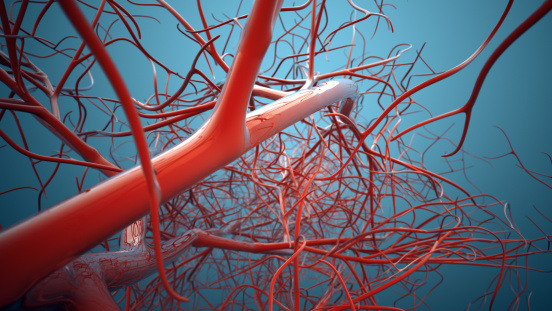
Hereditary hemorrhagic telangiectasia (HHT), also known as Osler-Weber-Rendu syndrome, is an autosomal dominate disorder characterized by arteriovenous malformations. In patients with HHT, veins are more prone to rupture causing bleeding that is often treated with transfusions. Researchers hypothesized that HHT patients may have an increased risk of alloimmunization due to increased antigen presentation in the lymph nodes or other underlying genetic factors.  In order to test this hypothesis, transfusion and alloimmunization records from 85 patients with HHT were retrospectively compared to 207 chronically transfused controls.  Although HHT patients received significantly fewer RBC units compared to controls (4.27 vs 8.84 units, p<0.0001), patients with HHT were 6 to 7 times more likely to become alloimmunized (15.3% vs 2.4%; p<0.001); anti-E (n=9), anti-K (n=8) and anti-c (n=3) were the three most common alloantibodies identified.  Further research is needed in order to confirm these findings and understand the underlying mechanism for alloimmunization in HHT patients.

Reference:

  1. Zheng Y, Pollak J, Henderson K, Hendrickson JE, and CA Tormey. A novel association between high red blood cell alloimmunization rates and hereditary hemorrhagic telangiectasia. Transfusion 2017; doi:10.1111/trf.14451

Filed Under

  • Adverse Events (non-infectious)
  • News
  • RBC Transfusion

Recommended

  • Blood Donation Intervals Should Be Extended to 180 Days To Avoid Iron Deficiency

  • VIDEO: Trial Evaluates Liberal vs. Restrictive Transfusion Approaches for Cardiac Surgery Patients

  • Higher Donor Body Mass Index is Associated with Increased RBC Hemolysis

Show Comments

Comments on this article are closed.

Get the latest news. Subscribe to our mailing list. Sign Up

Primary Sidebar

Latest News

  • Oropouche Virus RNA Detected in Blood Donors in Brazil

  • Intravenous Iron More Effective than Oral to Treat Anemia in Postpartum Women

  • Prehospital Whole Blood is Not Superior to Blood Components for Trauma Patients

  • Running Ultra-Long Distances Induces Inflammatory and Oxidative Stress Changes in RBCs

    Question of the Day

    Copyright © 2026 John Wiley & Sons, Inc. All Rights Reserved.
    Privacy Policy

    Association for the Advancement of Blood and Biotherapies Wiley