
• Skip to main content
  • Skip to primary sidebar
Transfusion News
  • About Us
  • Topics
    • Adverse Events (non-infectious)
    • Blood Donation
    • Cell Therapy
    • Coagulation & Plasma Transfusion
    • Platelet Transfusion
    • Policy and Guidelines
    • Quality Control and Regulatory
    • RBC Transfusion
    • Serology/Genotyping
    • Special Transfusion Situations
    • Transfusion Transmitted Infections
  • Continuing Education
  • Archives
  • Podcasts
  • Question of the Day
  • Search
  • Subscribe to Email Alerts
  • Follow us on
  • Search
  • Subscribe to Email Alerts

Influence of Transfusion Recipient and Donor Traits in Patients with Sickle Cell Disease

June 3, 2026

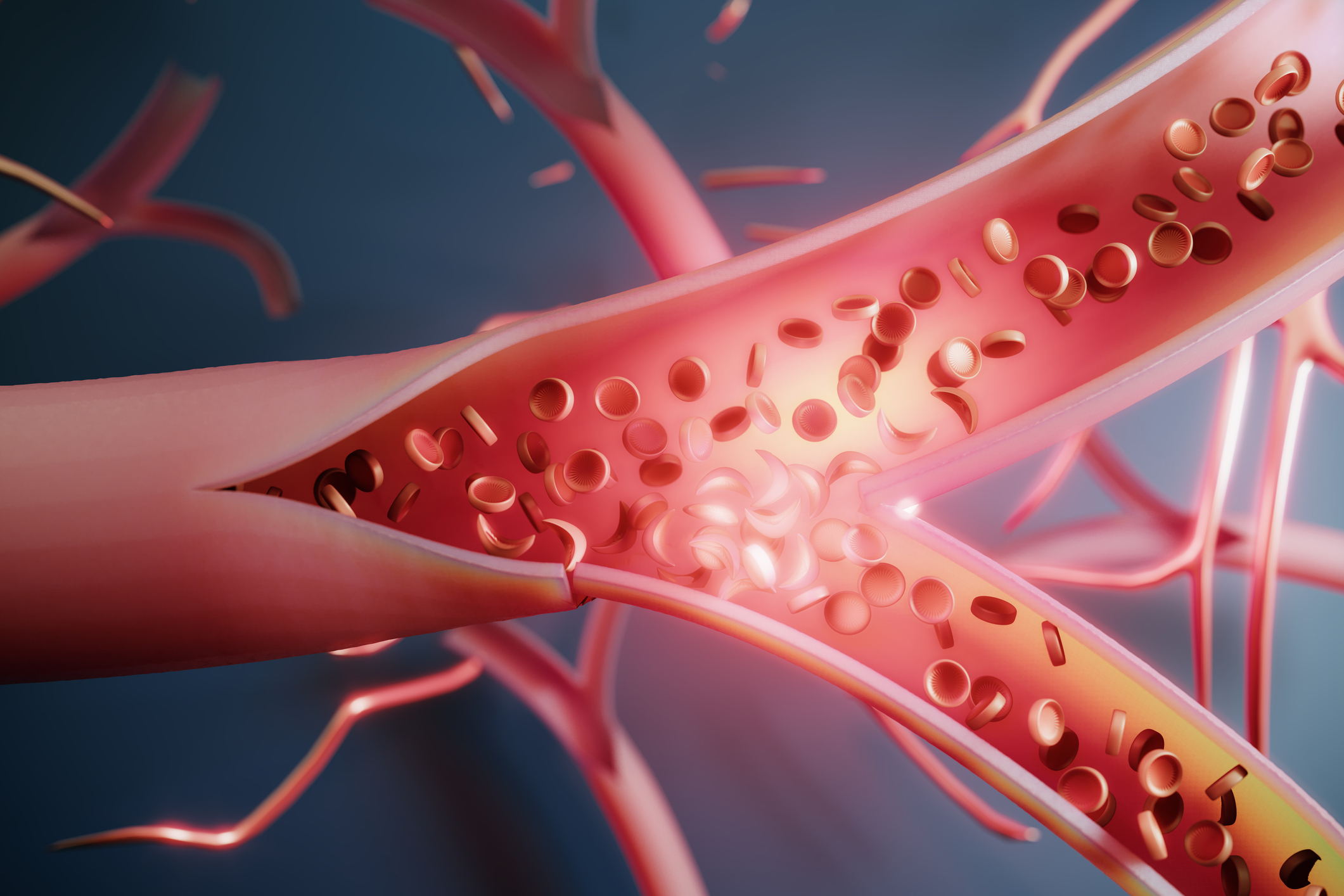
Many patients with sickle cell disease (SCD) receive chronic RBC transfusions to ensure non-sickled erythrocytes are in circulation. In 20-30% of chronic transfusion episodes, however, transfusion targets are not achieved because of poor survival of donor RBCs. To better understand recipient and donor traits that may affect RBC transfusion survival, 20 chronically transfused patients with SCD (ages 12 to 33 years) were transfused with two to three RBC units (total of 49 RBC units), of which aliquots of each RBC unit had been biotinylated to track RBC survival. Based on blood sampling (15 mins, 24 hours, and weekly up to 16 weeks) post-transfusion, the median post-transfusion recovery was 97% at 24 hours, 80% at 28 days, and 21% at 90 days. In multivariate linear mixed-effects models, recipient spleen size had the largest effect on RBC recovery; spleen size above the mean was associated with decreased RBC survival at all time-points (adjusted effect estimate range -7.7% to -21.4%). Most biotinylated RBC units had similar intra-patient survival, but donor glucose-6-phosphate dehydrogenase (G6PD) deficiency and alpha thalassemia trait were associated with significantly reduced RBC survival. Future studies on the effects of donor and recipient characteristics such as G6PD and alpha thalassemia are needed to better understand the efficiency of RBC transfusions and RBC survival.

Reference:

Yee MEM, Zerra PE, Francis RO, Easley KA, et al. Red cell transfusion survival in sickle cell disease is reduced by donor characteristics and recipient spleen activity. Blood Adv. 2026 Apr 22:bloodadvances.2025019005. doi: 10.1182/bloodadvances.2025019005. Epub ahead of print. PMID: 42018645.

Filed Under

  • News
  • RBC Transfusion

Recommended

  • SARS-CoV-2 Found in Blood—Is it Transfusion Transmissible?

  • New Ebola Treatment Options Available

  • Small-Volume Blood Collection Tubes Reduce Transfusion

Show Comments

Reader Interactions

Leave a Reply Cancel reply

Your email address will not be published. Required fields are marked *

Get the latest news. Subscribe to our mailing list. Sign Up

Primary Sidebar

Latest News

  • Influence of Transfusion Recipient and Donor Traits in Patients with Sickle Cell Disease

  • Pre-Hospital Resuscitation with Low-Titer Type O Whole Blood for Trauma Patients

  • Double-knotting Blood Storage Bag Tubing Reduces Contamination

  • Costs of Type & Screen and Crossmatch Laboratory Tests for RBCs Higher in U.S. Compared to U.K.

    Question of the Day

    Copyright © 2026 John Wiley & Sons, Inc. All Rights Reserved.
    Privacy Policy

    Association for the Advancement of Blood and Biotherapies Wiley