
• Skip to main content
  • Skip to primary sidebar
Transfusion News
  • About Us
  • Topics
    • Adverse Events (non-infectious)
    • Blood Donation
    • Cell Therapy
    • Coagulation & Plasma Transfusion
    • Platelet Transfusion
    • Policy and Guidelines
    • Quality Control and Regulatory
    • RBC Transfusion
    • Serology/Genotyping
    • Special Transfusion Situations
    • Transfusion Transmitted Infections
  • Continuing Education
  • Archives
  • Podcasts
  • Question of the Day
  • Search
  • Subscribe to Email Alerts
  • Follow us on
  • Search
  • Subscribe to Email Alerts

Transplant of Tissue-Engineered Esophagus Seeded with Stem Cells

April 25, 2014

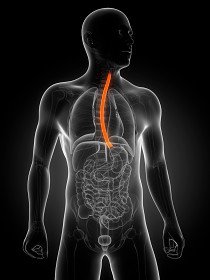
As reported in Nature Communications, researchers successfully transplanted tissue-engineered esophagi in rats.

After harvesting esophagi from donor rats, researchers disrupted the cells leaving a scaffold with native mechanical and chemical properties which were reseeded with bone marrow mesenchymal stromal cells from the recipient rats. Adhering cells had low immunogenicity and did not induce adverse immune responses. The grafts also started to show organ-specific characteristics after three weeks in culture. The tissue-engineered esophagi were then successfully transplanted into rats and over two weeks showed regeneration of the epithelium, muscle cells, nerves, and blood vessels. Currently, the only treatment available for esophageal cancer, congenital disorders, or trauma to the esophagus is reconstruction of the esophagus with tissues harvested from the intestine or stomach. A tissue-engineered esophagus could be advantageous for hundreds of thousands of patients.

Reference

1. Sjoqvist S, Jungebluth P, Ling Lim M, et al. Experimental orthotopic transplantation of a tissue-engineered oesophagus in rats. Nature communications 2014; 5: 3562.


Filed Under

  • News
  • Stem Cells

Recommended

  • Gene Therapy for Hemophilia A Decreases Bleeding

  • Consensus Definition for Massive Transfusion?

  • Transfusion of Red Blood Cells from Younger Donors Is Not Associated with Improved Survival

Show Comments

Comments on this article are closed.

Get the latest news. Subscribe to our mailing list. Sign Up

Primary Sidebar

Latest News

  • Pre-Hospital Resuscitation with Low-Titer Type O Whole Blood for Trauma Patients

  • Double-knotting Blood Storage Bag Tubing Reduces Contamination

  • Costs of Type & Screen and Crossmatch Laboratory Tests for RBCs Higher in U.S. Compared to U.K.

  • Gene Editing of HBG1 and HBG2 Promotors to Treat β-Thalassemia and Sickle Cell Disease

    Question of the Day

    Copyright © 2026 John Wiley & Sons, Inc. All Rights Reserved.
    Privacy Policy

    Association for the Advancement of Blood and Biotherapies Wiley